
Across cities, counties, campuses, and critical infrastructure sites, public safety agencies are adopting technology that helps responders act faster, share better information, and reduce risk in unpredictable situations. The latest innovations are not simply new gadgets; they are connected systems that combine communications, analytics, sensors, and field tools to support better decisions during emergencies.
TLDR: Public safety technology is rapidly evolving through next generation 911, artificial intelligence, drones, connected sensors, body cameras, robotics, and real time data platforms. These tools help agencies improve response times, situational awareness, officer safety, and community resilience. At the same time, leaders must address privacy, cybersecurity, bias, training, and public trust to ensure these innovations are used responsibly.
Smarter Emergency Communications
One of the most important developments in public safety is the continued rollout of Next Generation 911, often called NG911. Traditional emergency call systems were designed primarily for voice calls, but modern incidents often involve multimedia, mobile location data, text messages, video, and data from connected devices. NG911 allows public safety answering points to receive and manage more detailed information, giving dispatchers a clearer picture before police, fire, or emergency medical services arrive.
For example, a caller may be able to send a photo of a crash scene, a text message during a domestic violence incident, or precise location information from a smartphone. Dispatch centers can then route calls more accurately, coordinate with neighboring jurisdictions, and provide responders with better incident details. This evolution is especially valuable during major storms, mass casualty events, wildfires, and other situations where call volumes can quickly overwhelm legacy systems.

Artificial Intelligence in Public Safety Operations
Artificial intelligence is becoming a major force in public safety news and innovation. Agencies are using AI to support dispatch triage, analyze video feeds, detect anomalies, process records, and identify patterns across large data sets. In emergency communications, AI can help transcribe calls, translate languages, flag distress cues, and summarize incident details for faster review.
In the field, AI assisted systems may help command staff understand where resources are needed most. During a large fire, for instance, software can combine weather data, building information, traffic patterns, and incident reports to help leaders decide where to stage crews. In law enforcement, AI tools may assist with evidence review by sorting hours of video, identifying objects, or finding relevant clips more efficiently.
However, the use of AI in public safety requires careful governance. Public agencies must consider accuracy, explainability, bias, data retention, and accountability. Many communities are asking for clear policies that define when AI may be used, who can access the results, and how decisions will be audited. The most effective agencies treat AI as a decision support tool, not a replacement for trained professionals.
Drones and Aerial Situational Awareness
Drones, also known as unmanned aircraft systems, have moved from experimental programs to practical public safety assets. Fire departments use drones to assess roof conditions, locate hotspots, and monitor wildfire movement. Police departments may use them for search and rescue, crash reconstruction, tactical observation, and missing person cases. Emergency managers also rely on drone imagery after hurricanes, floods, earthquakes, or industrial accidents.
The value of drones lies in their ability to provide fast, low risk visibility. A drone can inspect a hazardous area before responders enter, reducing exposure to smoke, chemicals, unstable structures, or armed threats. Some agencies are also testing drone as first responder programs, where an aircraft launches after a 911 call and arrives before ground units, streaming live video to dispatchers and officers.

As drone programs expand, agencies must comply with aviation regulations, train pilots, manage evidence policies, and address community privacy concerns. Transparent public communication is often essential. When residents understand how drones are used, when they are not used, and how footage is stored, agencies are more likely to earn trust.
Body Cameras, In Car Video, and Digital Evidence
Body worn cameras and in car video systems remain central to public safety technology discussions. These tools can support transparency, document incidents, improve training, and provide important evidence. Newer systems offer automatic activation, cloud based storage, live streaming, and integration with computer aided dispatch or records management systems.
Digital evidence platforms are also evolving. Agencies increasingly need to manage video from body cameras, surveillance systems, drones, interview rooms, license plate readers, and community submissions. A single investigation may include dozens or hundreds of digital files. Modern evidence management systems help investigators store, tag, redact, share, and preserve files while maintaining a clear chain of custody.
Redaction tools are particularly important for protecting privacy. Before video is released to the public or shared in court, agencies may need to blur faces, license plates, medical information, juveniles, or bystanders. Automation can speed this process, but trained personnel still need to review results carefully.
Connected Sensors and Smart City Safety
Smart city infrastructure is creating new possibilities for prevention and response. Connected sensors can monitor air quality, flooding, traffic flow, gunshot sounds, bridge conditions, crowd density, and utility failures. When integrated responsibly, these systems help public safety agencies detect problems earlier and allocate resources more effectively.
For example, flood sensors can alert emergency managers before roads become impassable. Traffic signal priority can help ambulances and fire engines move through congested intersections more safely. Environmental sensors can identify hazardous gas leaks or smoke conditions inside large facilities. In transportation hubs, analytics may help detect overcrowding or abandoned objects that require attention.
- Flood monitoring: supports early road closure and evacuation decisions.
- Traffic management: improves emergency vehicle movement and reduces secondary crashes.
- Gunshot detection: can alert police to possible firearm incidents, though accuracy and policy review remain important.
- Building sensors: help responders understand smoke, heat, occupancy, and alarm conditions.
The greatest challenge is integration. Public safety leaders often need to connect systems from different vendors, agencies, and jurisdictions. Open standards, shared data agreements, and strong cybersecurity controls are becoming critical parts of smart public safety planning.
Wearables and Responder Health Monitoring
Responder safety is another major area of innovation. Wearable devices can monitor heart rate, body temperature, location, air supply, motion, and signs of distress. Firefighters working inside a structure may benefit from sensors that alert command staff if a responder stops moving or experiences dangerous heat stress. Police officers and paramedics may use location sharing tools that improve safety during foot pursuits, large events, or remote rescue operations.
These tools are especially valuable when paired with incident command platforms. Commanders can see where responders are assigned, whether units are available, and whether anyone may be in danger. In high stress emergencies, this type of visibility can prevent confusion and improve accountability.
Robotics for Hazardous Environments
Robotics continues to expand within bomb squads, hazardous materials teams, fire services, and search and rescue operations. Ground robots can inspect suspicious packages, enter unstable buildings, carry cameras into confined spaces, and manipulate objects from a safe distance. Some robots are designed for rugged outdoor terrain, while others are small enough to move through tight indoor areas.
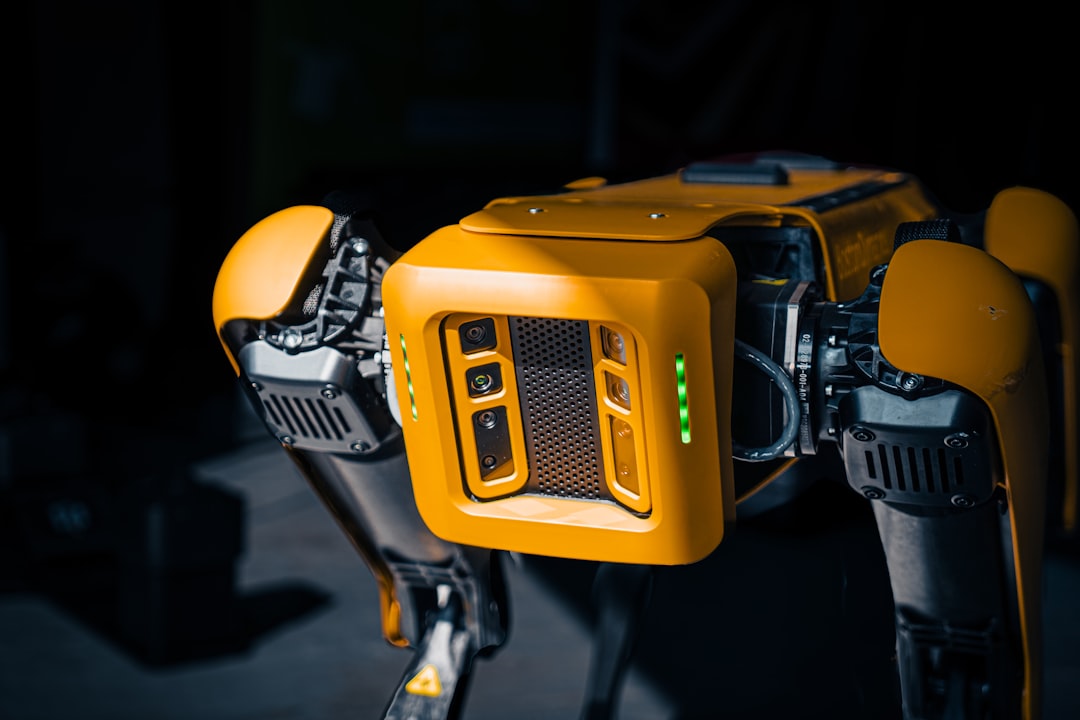
In disaster response, robots may be used to search collapsed structures or assess areas contaminated by chemicals, radiation, or fire. While robots do not replace trained responders, they can reduce risk during the most dangerous stages of an operation. As battery life, mobility, sensors, and remote controls improve, robotics will likely become a routine part of specialized response teams.
Cybersecurity as a Public Safety Priority
As public safety becomes more connected, cybersecurity becomes more important. Dispatch systems, radio networks, records databases, camera platforms, building access systems, and emergency alert tools can all be targets for ransomware or disruption. A cyberattack against a public safety agency is not only an IT problem; it can delay emergency response and endanger lives.
Agencies are increasingly investing in multi factor authentication, network segmentation, backup systems, encryption, vendor risk management, and cyber incident response plans. Training is also essential because phishing and social engineering remain common entry points. The most resilient organizations test their systems, rehearse cyber scenarios, and maintain offline procedures in case digital tools fail.
Interoperability and Regional Collaboration
Technology is most effective when agencies can communicate across boundaries. Major incidents often involve police, fire, EMS, public works, hospitals, utilities, transit agencies, schools, and state or federal partners. Interoperable radio systems, shared incident platforms, and common operating pictures help these groups coordinate more effectively.
Regional collaboration is particularly important for communities with limited budgets. Smaller agencies may share drone teams, digital evidence platforms, training facilities, or emergency communications infrastructure. Grants and regional purchasing agreements can also help departments access modern tools without duplicating costs.
Ethics, Privacy, and Public Trust
Public safety innovation must be balanced with civil liberties and community expectations. Technologies such as facial recognition, automated license plate readers, surveillance cameras, data analytics, and AI can raise legitimate concerns. Agencies that deploy these tools without public input may face resistance, even when the intended use is lawful and beneficial.
Best practices include publishing clear policies, limiting data retention, requiring supervisory approval for sensitive uses, conducting audits, and reporting program outcomes. Community engagement should occur before controversial tools are deployed, not only after questions arise. Public trust is strengthened when agencies explain what technology does, why it is needed, how data is protected, and how misuse is prevented.
What Comes Next
The next wave of public safety technology will likely focus on deeper integration, faster data sharing, and more intelligent automation. Augmented reality may help firefighters navigate smoke filled buildings or allow paramedics to receive remote specialist guidance. Advanced mapping may improve indoor location accuracy in malls, schools, airports, and high rise buildings. Real time translation may improve service in multilingual communities.
Still, the most successful innovations will be those that solve real operational problems. Technology should reduce workload, improve decision making, and protect lives. Agencies that invest in training, policy, cybersecurity, and community engagement will be better positioned to turn innovation into lasting public value.
FAQ
What is the most important public safety technology trend?
Next Generation 911 is one of the most important trends because it modernizes emergency communications and allows dispatch centers to receive richer information, including text, images, video, and more accurate location data.
How is AI being used in public safety?
AI is used to support call transcription, language translation, video analysis, data review, resource planning, and incident summaries. It is generally most appropriate as a decision support tool rather than a replacement for human judgment.
Are drones safe for public safety agencies to use?
Drones can improve safety by giving responders visibility in hazardous areas before personnel enter. Safe use depends on proper pilot training, aviation compliance, clear policies, and privacy protections.
Why is cybersecurity important for emergency services?
Public safety agencies rely on connected systems to dispatch units, store records, manage evidence, and communicate during emergencies. Cyberattacks can disrupt these services, so strong cybersecurity planning is essential for operational continuity.
How can agencies build public trust with new technology?
Agencies can build trust by being transparent, publishing policies, limiting data collection, auditing usage, protecting privacy, and inviting community input before deploying sensitive technologies.