
Hand tracking in VR feels like magic. You raise your hands, wiggle your fingers, and the virtual world responds. No controllers. No buttons. Just you. But here is the big question many people ask in 2026: Does Quest hand tracking need light to work?
The short answer is yes. But also… not always in the way you think. Let’s break it down in a fun and simple way.
TLDR: Quest hand tracking uses cameras to see your hands, and cameras need light to work properly. In bright or normal indoor lighting, hand tracking works great. In very dark rooms, performance drops significantly because the cameras cannot clearly see your hands. Infrared helps, but it still depends on light reflection to function.
How Quest Hand Tracking Actually Works
First, let’s explain the basics.
The Meta Quest headset has multiple outward-facing cameras. These cameras constantly scan the environment around you. That includes your hands.
Instead of holding controllers, the system tracks:
- Finger positions
- Hand shape
- Movement speed
- Gesture patterns
It then uses AI models to turn that information into a virtual hand inside VR.
It sounds simple. It is not.
Under the hood, it’s doing:
- Computer vision processing
- Machine learning prediction
- Depth estimation
- Skeletal modeling
All of this happens in milliseconds.
But here is the catch. The cameras must see your hands clearly for any of this to work.
So… Does It Need Light?
Yes. Quest hand tracking needs light.
Why?
Because cameras need light to capture images. No light means no visible hand data.
Think about trying to take a photo in a pitch-black room. You get nothing. The same principle applies here.
The Quest cameras are not X-ray vision. They can’t see in total darkness.
But Wait — What About Infrared?
Great question.
The Quest headset uses infrared (IR) illumination as well as standard camera sensors. Infrared helps the device:
- Track movement more consistently
- Detect contrast
- Improve spatial awareness
- Handle low-light situations better
However, infrared still relies on reflected light. It sends out IR light and reads how it bounces back.
No reflection? No usable data.
Very dark surfaces? Harder tracking.
Hands blending into background? Tracking may struggle.
What Happens In A Dark Room?
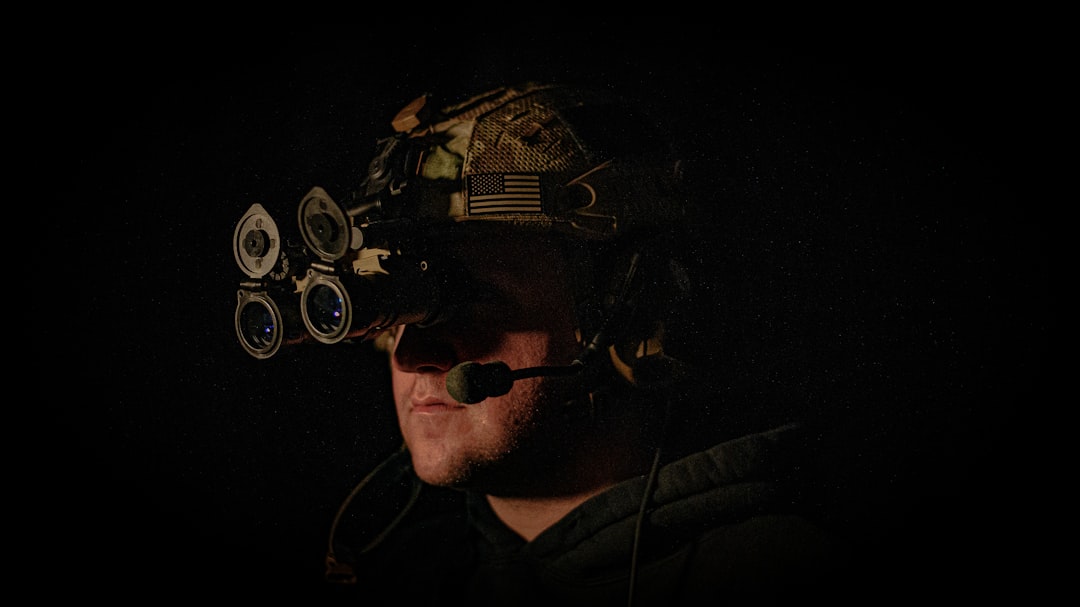
If you try hand tracking in a completely dark room, you will likely notice:
- Laggy finger movement
- Hands disappearing
- Gesture failure
- Poor accuracy
Sometimes it may not work at all.
The headset might even show a message telling you the room is too dark.
That is because the system cannot confidently identify your hand edges or finger positions.
In VR, uncertainty causes jitter.
Ideal Lighting Conditions
Here is when Quest hand tracking works best:
- Soft indoor lighting
- Natural daylight (not extreme sunlight)
- Even lighting across the room
- No strong shadows over hands
Think “living room lighting” levels.
You do not need bright studio lights. You just need enough light for clear contrast.
Lighting Conditions Comparison
| Lighting Type | Tracking Performance | Notes |
|---|---|---|
| Bright indoor lighting | Excellent | Smooth and accurate tracking |
| Natural daylight | Very good | Avoid direct sunlight into cameras |
| Dim lighting | Moderate | Some jitter may appear |
| Very dark room | Poor | Frequent loss of tracking |
| Total darkness | Does not work | No visible hand data |
Why Controllers Work Better In The Dark
You might notice something interesting.
Controllers often still work in darker rooms.
Why?
Because controllers have dedicated infrared LEDs. They actively emit tracking signals that the headset can detect easily.
Your hands do not emit signals. They only reflect light.
That makes natural hand tracking more sensitive to lighting conditions.
How AI Predicts Your Fingers
Here is something cool.
Even when the tracker loses sight of a finger briefly, it can guess where it likely moved.
It does this using trained neural networks.
The system:
- Recognizes typical hand shapes
- Understands common gestures
- Predicts motion paths
- Reconstructs hidden finger positions
This is why hand tracking feels smooth most of the time.
But prediction only works if there is some data to work with. In pure darkness, prediction fails quickly.
Does Hand Tracking Work Outside At Night?
It depends.
If there are streetlights or porch lights nearby, it may work fine.
If you are in the middle of a dark field with no lighting at all, performance will drop heavily.
Moonlight alone is usually not enough.
The cameras need clearer contrast than that.
What About Mixed Reality Mode?
In mixed reality, the headset blends your real environment with digital elements.
This mode actually requires even more visual clarity.
Why?
Because the system is analyzing:
- Room layout
- Walls and surfaces
- Furniture
- Your hands
All at the same time.
Poor lighting can reduce both environment mapping and hand tracking accuracy.
Common Lighting Mistakes
Even if your room is not dark, you can still cause tracking problems.
Here are common mistakes:
- Strong backlighting behind you
- Bright window directly facing headset cameras
- Very shiny surfaces reflecting glare
- Hands blending into dark clothing
The system needs contrast.
If your hands visually blend with the background, tracking becomes harder.
Can You Improve Hand Tracking Yourself?
Yes. And it’s easy.
Try these simple tips:
- Turn on an extra lamp
- Use warm, even lighting
- Avoid direct sunlight hitting cameras
- Keep hands in front of headset
- Avoid moving too fast in dim environments
Sometimes just one lamp makes a huge difference.
Has Hand Tracking Improved By 2026?
Absolutely.
Compared to early versions, hand tracking in 2026 is:
- More stable
- Less jittery
- Better at occlusion handling
- More responsive
Machine learning models are better trained. The processing chips are more powerful. Sensor fusion is smarter.
But physics still wins.
Cameras need light.
Image not found in postmetaWill Future Quests Work In Complete Darkness?
It is possible. But not simple.
To work in total darkness, future headsets would need:
- Strong onboard infrared flood lights
- Active depth sensing systems
- LiDAR-style scanning
- Thermal tracking sensors
These additions increase:
- Cost
- Power consumption
- Heat generation
- Weight
For now, moderate lighting is the simplest and most efficient solution.
Is Hand Tracking Better Than Controllers In 2026?
That depends on the task.
Great for:
- Menus
- Media browsing
- Social VR
- Light interaction games
Still better with controllers:
- Fast-paced shooters
- Competitive games
- Precise aiming tasks
- Haptic feedback experiences
Controllers remain more reliable in darker environments.
Final Answer: Does Quest Hand Tracking Need Light?
Yes. It does.
Quest hand tracking relies on camera-based computer vision. Cameras need visible or infrared light reflected from your hands. Without enough light, tracking becomes unstable or stops entirely.
The good news? You do not need bright studio lights. Just normal room lighting is enough.
So if your hands start disappearing in VR, do not panic.
Just turn on a lamp.
Sometimes the solution to futuristic technology is wonderfully simple.